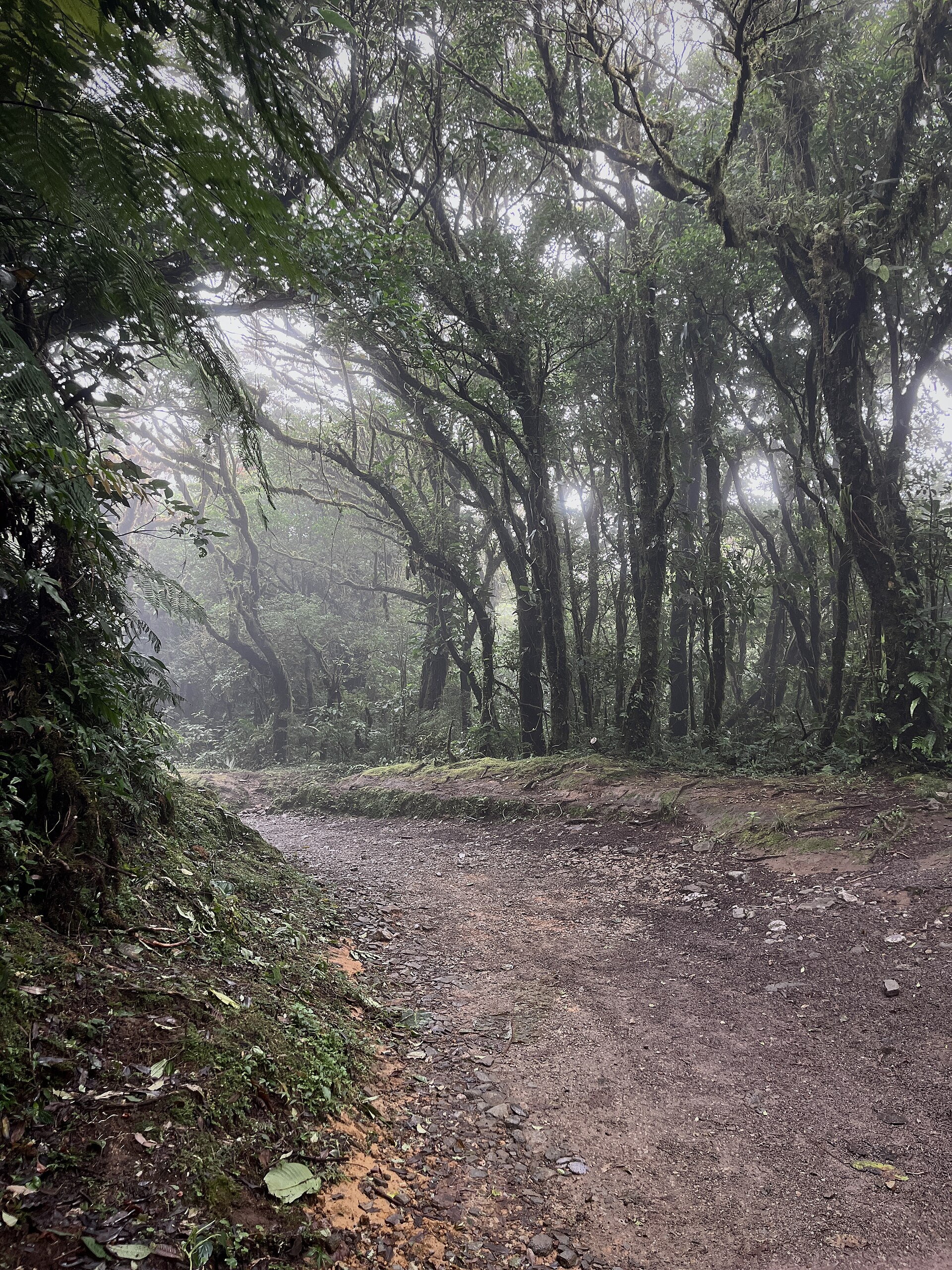
4WD vs AWD, when to engage 4×4 mode, braking on hills, river crossings, and why a 4×4 drives like a car until the road gets hard.
Updated
Renting a 4×4 in Costa Rica sounds like an expedition — in practice it drives like a normal SUV until the road turns to gravel, mud, or 25% grade. Independent travel guides stress the same point: the vehicle is confidence and clearance, not a tank for reckless off-roading.
4×4 vs 4×2 SUV vs AWD
| Type | What it is | Tourist use |
|---|---|---|
| 4×4 / 4WD | Low range or lockable 4WD | Monteverde, wet Nicoya, remote lodges |
| AWD / full-time 4WD | Always powers all wheels | Good middle ground |
| 4×2 SUV | 2WD, higher clearance | Dry Pacific, paved only |
Decision tree: Do you need 4×4?
Weight and braking
4×4 rentals are heavier than sedans:
- Brake earlier on downhill curves (Monteverde, Arenal)
- Longer stopping distance when loaded with family + luggage
- Downshift on steep gravel instead of riding brakes
Nothing terrifying — just drive like the vehicle is loaded.
Using 4WD controls
At pickup, ask the agent to show:
- 4WD lock / 4L — if equipped (rarely needed on tourist tracks)
- Hill descent control — if available
- Tire pressure — should match door sticker
Dry paved highway: 2WD mode saves fuel if switchable.
Wet gravel uphill: engage 4WD before you spin — not after.
Gravel technique
- Center slow — avoid soft edges
- Pass on straight sections — not curves
- Yield to uphill traffic on narrow tracks
- Following distance — dust hides potholes
Speed target: 25–35 km/h — road conditions
River crossings (rare but real)
Some remote lodges mention seasonal creeks:
- Never cross if water is above center hub or fast
- Walk the depth first if locals do
- Rental insurance may exclude water damage — read contract
Main tourist routes rarely require crossings — if Waze routes through a ford, reconsider.
Monteverde-specific
- Last miles are steep gravel — 4×4 or high AWD
- Fog reduces visibility — daytime only
- Full guide: Monteverde drive
Beach and sand
Driving on beach sand is generally prohibited by rental contracts — park in lots. Soft sand traps 2WD instantly.
Return inspection
Gravel trips mean:
- Photo undercarriage angles if possible at pickup
- Note existing scrapes on contract
- Wash excessive mud if return requires clean vehicle — counter red flags
Training in 5 minutes at pickup lot
Before leaving the lot:
- Adjust mirrors for wider body
- Test brakes gently
- Find 4WD button location
- Locate spare tire / jack policy
- Save emergency number offline
A 4×4 unlocks Costa Rica’s best lodges and viewpoints — slow speed, correct mode, and no beach sand heroics beat expensive return disputes every time.
Frequently asked questions
Is driving a 4×4 in Costa Rica difficult?
On paved roads it feels like any SUV — heavier braking, wider turns. Gravel and steep hills need slow speed and optional 4WD mode. No special license required.
When should I turn on 4WD mode?
On steep wet gravel, mud, or sandy beach access — not on dry highway. Many rentals are full-time AWD; others have a 4WD lock button — ask at pickup.
Do I need off-road driving experience?
Not for standard tourist routes like Monteverde or Nicoya in dry season. Extreme river crossings and deep mud are rare on mainstream itineraries — turn back if unsure.
Is 4×2 SUV enough instead of 4×4?
Sometimes on Pacific dry season — see route matrix. Monteverde, rainy Nicoya, and remote lodges usually justify true 4×4.